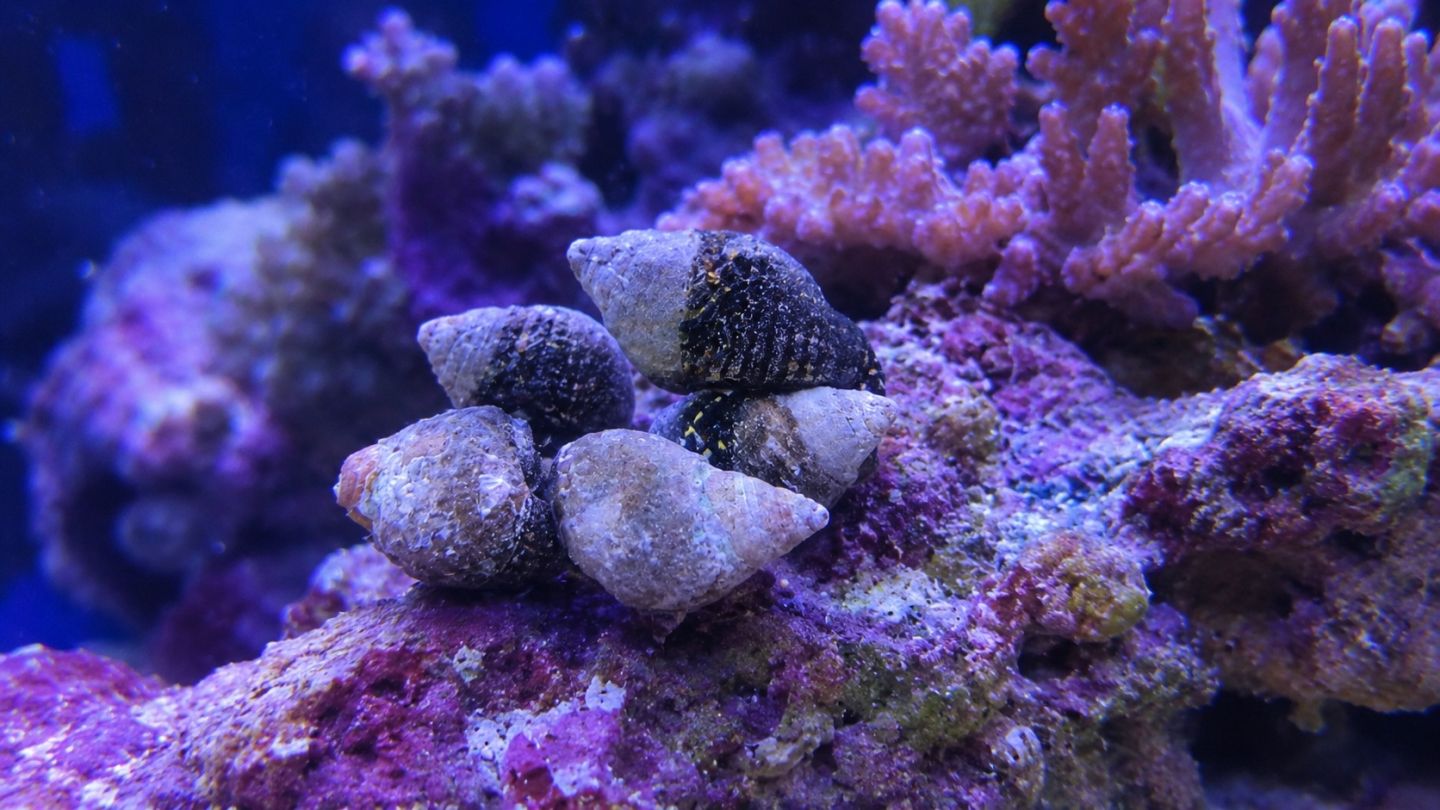
Species Profile: Planaxis sulcatus
Scientific name: Planaxis sulcatus
Common name: Sulcatus Planaxis Snail
Family: Planaxidae
Class: Gastropoda (Gastropods)
Distribution: Tropical Indo-Pacific
Habitat: Rocky shores, coral reefs, intertidal areas and shallow reef zones
Diet: Algae and organic biofilm
Lifestyle: Mainly nocturnal, crawling and living on hard surfaces
Appearance
Planaxis sulcatus has a relatively small, cone-shaped shell with clearly defined spiral grooves. The shell coloration ranges from light to dark brown and gray tones and may feature various bands or spots. Its robust shell is well adapted to life in wave-exposed coastal environments.
Habitat and Distribution
The species is found throughout tropical and subtropical regions of the Indo-Pacific. It prefers rocky surfaces, coral rubble and other hard substrates in shallow coastal areas. It is often found in habitats that are regularly influenced by the tides.
Behavior
Planaxis sulcatus moves slowly across rocks and other hard surfaces. The snails may occur in groups and are particularly common in sheltered areas between rocks and within algae-covered surfaces.
Diet
The snail mainly feeds on algae growing on hard surfaces. Using its specialized rasping tongue, known as a radula, it scrapes algae and organic biofilm from rocks and other surfaces.
Keeping in a Marine Aquarium
Planaxis sulcatus can be a useful inhabitant of a tropical marine aquarium. It grazes on algae and various organic deposits growing on rocks and other surfaces.
For successful care, sufficient natural algae growth and stable water parameters are important. Since the snail depends on hard surfaces, the aquarium should provide plenty of live rock and other structured surfaces for grazing.
Special Features
One of the most interesting features of Planaxis sulcatus is its adaptation to the dynamic conditions of tropical coastal habitats. Its robust shell helps protect the animal from mechanical stress caused by waves and strong currents. Through its grazing activity, the snail can contribute to controlling algae growth on natural surfaces.
* This text was edited using AI and has been reviewed by us for accuracy
 Secure payment
 Live arrival guaranteed
 Various exclusive articles
 Overnight shipping service Europe-wide